

EKA 7T Electric Truck 2026: Features, Range, Battery and Specifications
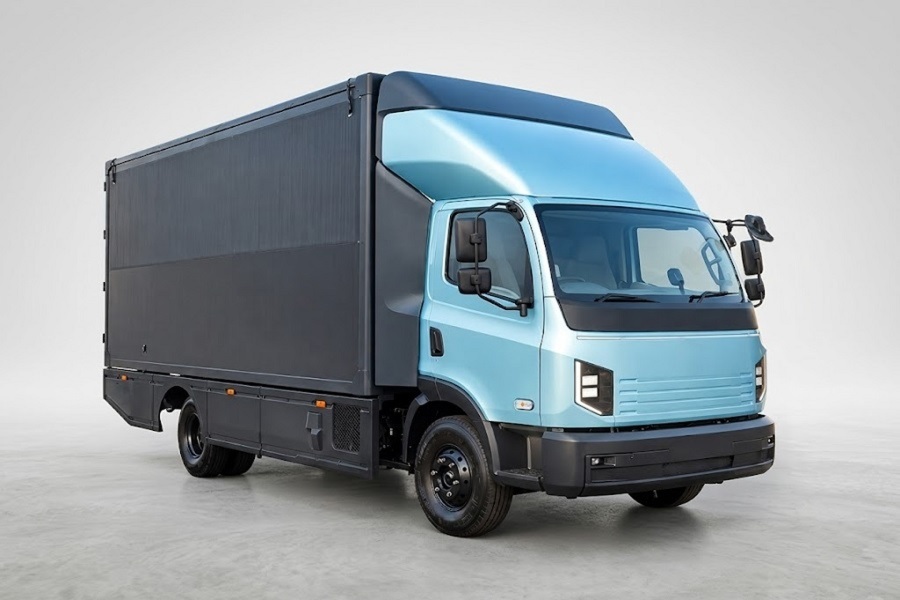
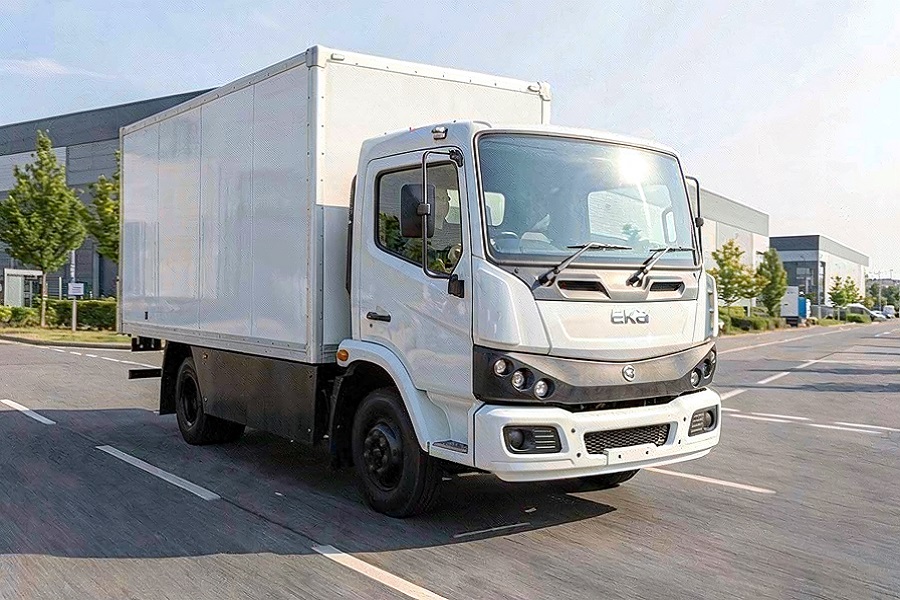
The EKA 7T Electric Truck is a medium-duty electric commercial vehicle developed for cargo transportation and sustainable logistics operations in India. EKA Mobility lists the 7T as part of its electric truck portfolio, with a focus on practical cargo capacity, zero-tailpipe-emission operation and lower dependence on conventional diesel power.
The truck has a 6,950 kg gross vehicle weight (GVW) and a rated payload of 3,500 kg. Its electric powertrain uses a PMSM traction motor and a 129 kWh LFP battery pack, with a claimed range of up to 200 km, depending on the application and driving cycle.
EKA 7T Electric Truck 2026 Highlights
Model: EKA 7T
Vehicle type: Electric cargo truck
GVW: 6,950 kg
Payload: 3,500 kg
Drive configuration: 4x2
Motor: PMSM
Rated motor power: 120 kW
Peak motor power: 200 kW
Peak torque: 1,800 Nm
Battery: 129 kWh LFP
Claimed range: Up to 200 km
Top speed: 80 km/h
Gradeability: 22%
Charging: CCS2
Fast charging time: Around 3 hours
Seating: Driver + 2
Specifications are based on EKA Mobility's published 7T product brochure and can change according to configuration or future upgrades.
Electric Motor and Performance
The EKA 7T uses a Permanent Magnet Synchronous Motor (PMSM). EKA's published specifications give the motor a rated output of 120 kW and peak power of 200 kW, with peak torque of 1,800 Nm. This high torque output is designed to support cargo operations and demanding urban transport conditions.
The truck has a claimed maximum speed of 80 km/h and a gradeability of 22%. These characteristics make it suitable for planned cargo routes where charging infrastructure can be incorporated into fleet operations.
Battery and Range
The EKA 7T is equipped with a 129 kWh lithium-iron-phosphate (LFP) battery. EKA lists a driving range of up to 200 km, while noting that the actual range depends on the application and driving cycle.
LFP battery technology is widely used in commercial electric vehicles because of its emphasis on durability and thermal stability. For fleet operators, the practical range will depend on payload, road conditions, traffic, weather and driving style.
Charging
The electric truck uses a CCS2 charging socket. EKA's published brochure lists a 120 kW single-gun charger and a fast-charging time of approximately 3 hours.
Charging requirements make route planning important for fleet operators. The truck can be particularly useful on predictable routes where vehicles return to a depot for scheduled charging.
Payload and Cargo Applications
With a GVW of 6,950 kg and payload capacity of 3,500 kg, the EKA 7T is designed for medium-duty cargo transportation. Its 4x2 configuration and ladder-frame chassis support conventional commercial-vehicle applications.
Potential applications include:
FMCG distribution
E-commerce deliveries
Parcel and courier transportation
Industrial goods
Retail distribution
Agricultural products
Urban logistics
Contract logistics
Dimensions and Cargo Body
EKA's published specifications give the 7T a 3,320 mm wheelbase. The cab-chassis dimensions are listed as 6,092 mm long, 1,945 mm wide and 2,430 mm high. The CBU configuration is listed at 6,210 mm long, 2,110 mm wide and 2,480 mm high.
The listed cargo deck dimensions are 3,200 mm × 2,005 mm × 1,380 mm, while the container volume is listed at 312 cubic feet.
Suspension and Braking
The EKA 7T uses a semi-elliptical leaf spring suspension at the front and a semi-elliptical leaf spring setup with helper springs at the rear. The published brochure lists drum brakes at both the front and rear.
The suspension configuration is designed around commercial cargo use and load-carrying requirements.
Cabin and Driver Comfort
The EKA 7T has seating for the driver and two passengers. It uses power steering and an automatic transmission arrangement associated with its electric powertrain.
The electric drivetrain also removes the need for a conventional multi-speed gearbox, helping simplify the power delivery system.
Sustainability and Operating Benefits
The biggest difference between the EKA 7T and a conventional diesel truck is its battery-electric powertrain. It produces no tailpipe emissions during operation and can help fleets reduce their dependence on diesel fuel.
Electric commercial vehicles can also offer lower routine powertrain maintenance because they have fewer conventional engine components. However, total operating costs depend on electricity prices, charging infrastructure, battery usage, financing and route requirements.
EKA 7T Electric Truck 2026 Specifications
Specification EKA 7T
Vehicle type Electric cargo truck
GVW 6,950 kg
Payload 3,500 kg
Configuration 4x2
Motor PMSM
Rated power 120 kW
Peak power 200 kW
Peak torque 1,800 Nm
Continuous torque 957 Nm
Battery 129 kWh LFP
Range Up to 200 km*
Top speed 80 km/h
Gradeability 22%
Charging socket CCS2
Fast charging Around 3 hours
Seating D + 2
Wheelbase 3,320 mm
Chassis Ladder frame
*Range depends on application and driving cycle. Specifications are subject to change according to EKA Mobility's product updates.
EKA 7T Price in India
The final purchase price can vary depending on the vehicle configuration, cargo body, location, financing and commercial terms. Buyers should confirm the latest ex-showroom price directly with EKA Mobility or an authorised dealer before making a purchase.
EKA 7T 2026: Article Information
Article Information Details
Article title EKA 7T Electric Truck 2026
Brand EKA Mobility
Model EKA 7T
Category Commercial Vehicle
Segment Electric Truck
GVW 6,950 kg
Payload 3,500 kg
Battery 129 kWh LFP
Range Up to 200 km
Motor PMSM
Peak power 200 kW
Charging CCS2
Drive 4x2
Main use Cargo and logistics
Market India
Status EKA electric truck portfolio
Conclusion
The EKA 7T Electric Truck 2026 combines a 3.5-tonne payload capacity with a 129 kWh LFP battery and a claimed range of up to 200 km. Its 200 kW peak motor output, 4x2 configuration and CCS2 charging system make it a commercial EV designed for cargo and logistics applications.